Complaint Statistics
September 2026
In this edition we present the complaints statistics for the first half year of 2026.
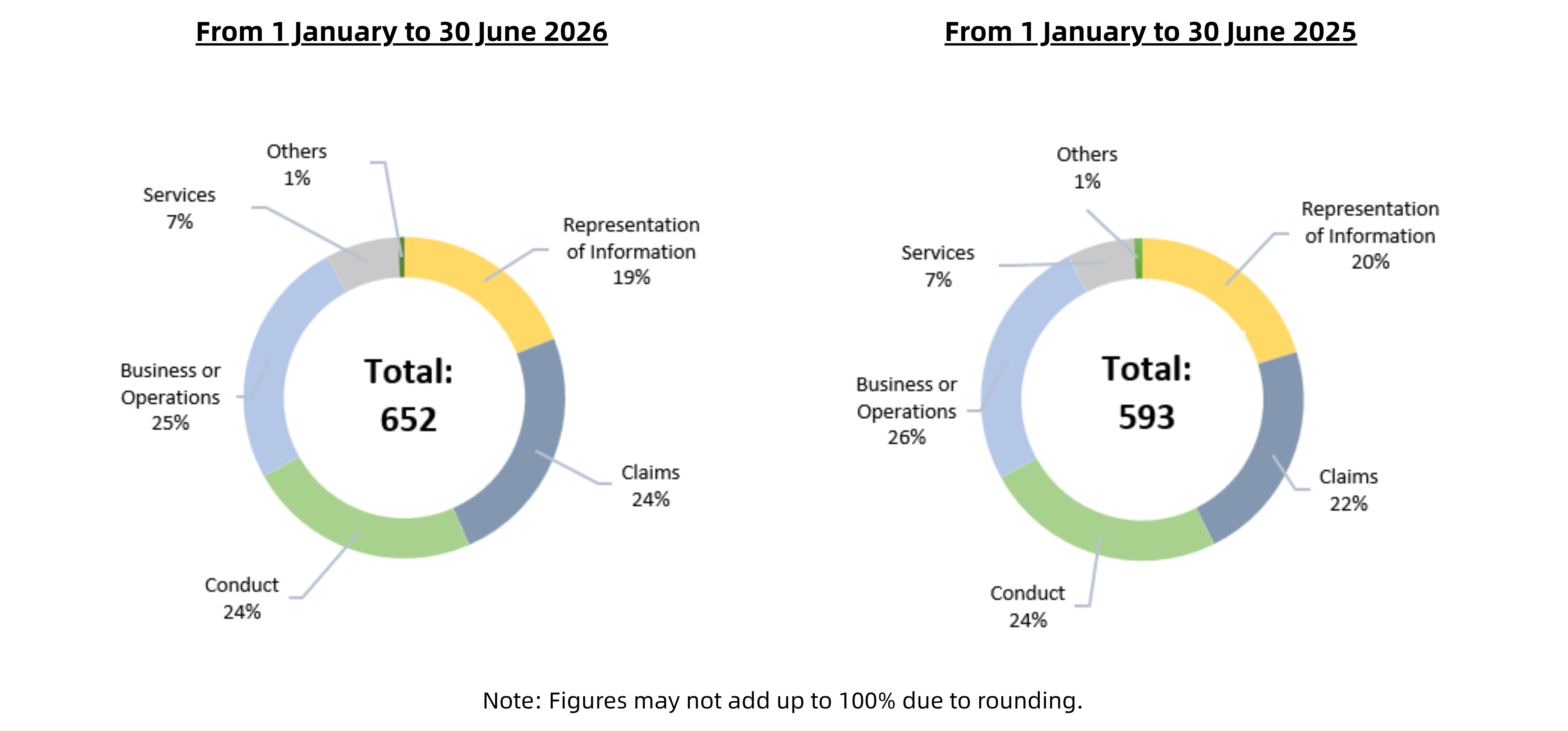
Explanation of Complaint Categories
Conduct – refers to complaints arising from the process in which insurance is sold, the handling of client’s premiums or monies, cross-border selling, unlicensed selling, allegations of fraud, allegations of forgery of insurance related documents, commission rebates and “twisting” (i.e. insurance intermediaries inducing their clients to replace their existing policies with those issued by another insurer by misrepresentation, fraudulent or unethical means).
Representation of Information – refers to complaints relating to the presentation of an insurance product’s features, policy terms and conditions, premium payment terms or returns on investment, dividend or bonus shown on benefit illustrations, etc.
Claims – refers to complaints in relation to insurance claims. The IA cannot adjudicate insurance claims or order payment of compensation. It can, however, handle complaints related to the process by which claims are handled (e.g. delays in processing, lack of controls or weaknesses in governance, areas of inefficiency in the claims handling process).
Business or Operations – refers to complaints related to business or operations of an insurer or insurance intermediary (e.g. cancellation or renewal of policy, adjustment of premium, underwriting decision, or matters related to the management of the insurer, etc.).
Services – refers to complaints regarding insurance related servicing by insurers or intermediaries, such as complaints related to the delivery of premium notice or annual statement, dissatisfaction with services standards etc.
Overall Complaint Trend
The IA received 652 complaints in the first half of 2026 representing a 10% increase over the same period from the previous year. The increase, however, is far lower than the surge in premium growth across the market (i.e. up 32%) in the first quarter of 2026, versus the same period in 2025, indicating that complaints from policyholders may be growing, but not as fast as overall market size growth.
In terms of category, the most significant number of complaints fell under the category of “Business or Operations”, followed by “Claims” and “Conduct”.
Complaints related to “Business or Operations” registered a 9% year-on-year growth. Key drivers included dissatisfaction with policy administration and complaints against insurers’ management on business and operation matters. A concentration of cases was observed involving dissatisfaction with insurers’ handling of agent assignments and lack of service of the assigned agents (an issue that may be exacerbated by turnover of agents – a matter you can read more about in this edition, in our article focused on Key Persons in Control Function for Intermediary Management).
Claims-related complaints ranked second in the reporting period and medical-related claims accounted for the largest share of overall complaints in this category, followed by “Motor” and “Travel”. The complaints on claims focus on unexpected delays in claims settlement and instances where policyholders feel they are not receiving the compensation to which they are entitled.
The number of complaints concerning insurance intermediaries remained relatively stable overall. However, complaints related to misrepresentation, inappropriate advice, fraud and forgery of insurance related documents continue to account for a consistent proportion of the total. The IA maintains a vigilant watch over these developments and will deploy heightened regulatory oversight (including enforcement action) where warranted.